
Spider Solitaire
PubRev+Card
4.54.35K Reviews
- Version
- 1.57
- Installs
- 1.00M
- Age Rating
- Everyone
Screenshots

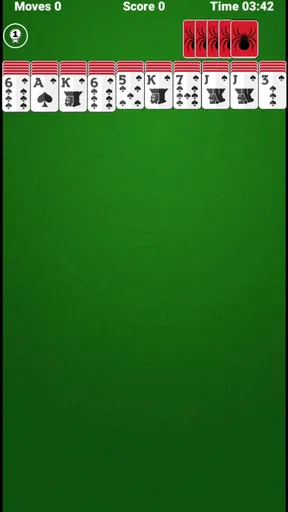

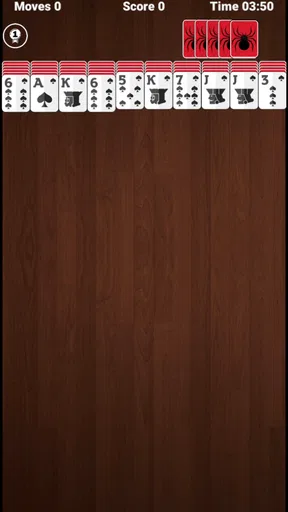



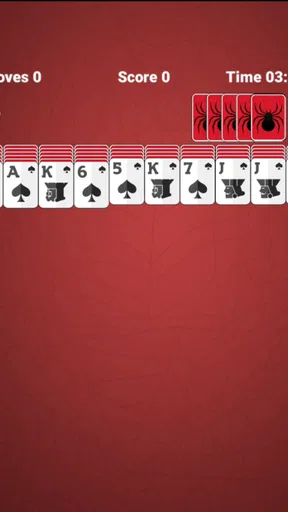
Our Review of Spider Solitaire
 Analysis by Appyee
I usually approach solitaire games expecting a quiet way to fill a few minutes, not a dramatic gaming experience. Spider Solitaire from PubRev+ fits that expectation, but it also gives the familiar card format enough choice and presentation to stay interesting. The game is free, rated for Everyone, and built around Spider Solitaire rounds that can be played with one to four suits. That range matters more than it may sound: it lets the same basic game move from a gentle break to a much more demanding puzzle.
My first impression is of a game designed to keep attention comfortable rather than constantly compete for it. The relaxing music and selectable themes create a calm frame around the cards, while the leaderboard adds a small competitive edge for players who want one. It is not trying to turn a traditional card game into an action title. Instead, its appeal comes from pacing, clarity, and the satisfaction of gradually exposing a blocked layout.
The game has been available since October 11, 2016, and its current version is 1.57. It supports devices running Android 7.0 or later. The long presence on the platform is reflected in its established audience: it has passed one million installs, with an average rating of 4.5 from around twenty thousand ratings and roughly 4.3 thousand written reviews. Those figures do not replace personal experience, but they do suggest that the straightforward approach has found a dependable audience.
From a familiar card table to a complete mood
I find that the appeal here starts with how little effort it takes to settle in, but the section also looks at why the table’s visual choices can affect concentration rather than merely decorate the screen. When I choose a theme, I’m not just changing the mood; I’m deciding how easily I can read crowded stacks during a longer session. That distinction becomes especially useful as the card layout grows more demanding.
A gentle first contact
Spider Solitaire works best when I treat it as a small ritual rather than a game I need to rush through. I can open it, choose a layout style that feels comfortable, and begin sorting cards without learning a complicated interface. That low barrier is important for this genre. A card game loses much of its value if menus and visual noise get in the way of the first move.
The core idea remains recognizable: arrange cards in descending sequences, build complete runs, and clear them from the table. The one-suit setting is the most approachable place to start because the decisions are easier to read. It is useful for someone who knows ordinary solitaire but has not spent much time with Spider Solitaire, and it also works when I want a relaxed session with fewer moments of paralysis.
Moving toward two, three, or four suits changes the character of the game. More suits create more opportunities for temporary stacks that look useful but cannot be moved as a complete sequence. The result is a stronger need to plan empty columns, uncover hidden cards at the right time, and avoid locking the board with attractive but inefficient moves. I like that the difficulty is expressed through the card structure itself rather than through artificial pressure.
Visual choices that support concentration
The themes are more than a decorative extra when viewed through the rhythm of a long solitaire session. A card table that feels too bright, too busy, or too repetitive can make a quiet game tiring. Here, changing the theme gives me a way to adjust the emotional temperature of the session. I might prefer a softer presentation when playing before bed, while a clearer, higher-contrast option is more practical when I am playing in a bright room.
This is where the art direction and mechanics meet. The cards have to remain the visual priority, but the surrounding setting determines how long I want to stay. A good theme should frame the layout without competing with it. In my experience, the most useful choice is not necessarily the prettiest one; it is the theme that lets me distinguish suits, ranks, and partially covered stacks at a glance.
That distinction becomes increasingly important in four-suit games. When the board is crowded with similar-looking sequences, a decorative background can become a liability if it reduces separation between columns. I would therefore choose a theme based on readability first and atmosphere second. Players who enjoy customizing the look may spend time trying different combinations, but serious rounds still benefit from a restrained visual setup.
The setting is a table, not a story world
There is no need to search for a narrative setting here. The “world” of the game is the card table, and its language is communicated through familiar suits, stacked columns, completed runs, and the gradual clearing of space. That simplicity is a strength. I never feel that the presentation is asking me to interpret lore or follow a character when what I really want is to solve a layout.
Because the setting is so focused, small presentation decisions carry more weight. Themes suggest whether the table feels cozy, classic, or more contemporary, while the music gives the session its emotional direction. The game’s identity comes from how these modest elements work together around the cards, not from a large collection of unrelated content.
This also makes it easy to recommend to different kinds of players. Someone looking for a traditional card pastime can ignore the decorative layer and concentrate on the puzzle. Someone who wants a more pleasant background experience can use the themes and music to make repeated rounds feel less stark. Neither approach undermines the other.
Sound, pacing, and the feel of a complete round
A quiet soundtrack can make a round feel unhurried, yet the right pace depends on what I’m doing and how many suits I choose. I’d treat music as part of the atmosphere, not a requirement: silence can be more practical in shared spaces or when the game is accompanying another activity. The next section considers how that calm presentation holds up as a round shifts from quick moves to deliberate planning.
Relaxing music with a practical purpose
The relaxing music is one of the clearest parts of the game’s mood. In many card apps, audio feels like an afterthought, something that can be switched on but does not affect the way the session feels. Here, music helps establish a slower pace. It encourages me to look at the whole arrangement before moving a stack instead of tapping through decisions as quickly as possible.
That does not mean the soundtrack will suit every situation. If I am listening to a podcast, working, or playing in a public place, I would rather keep the game quiet. Solitaire is often used as a companion activity, so audio needs to remain optional in practical terms. The important point is that the musical direction matches the game’s purpose: it supports a calm table rather than trying to manufacture excitement.
Sound can also influence how long a session feels. With a fast or aggressive presentation, a difficult layout might become frustrating sooner. A gentler musical backdrop gives me more patience to examine alternate moves and recover from a poor decision. That is especially valuable in multi-suit games, where the puzzle can become a slow exercise in preserving future options.
Why the pacing feels different across suit levels
One-suit Spider Solitaire has a naturally smooth rhythm. I can often identify a useful sequence quickly, clear a column, and continue without spending too long weighing every possibility. It is the version I would choose for a short break, a waiting room, or the final few minutes before putting my phone away.
Two-suit play introduces a more deliberate beat. I have to think about whether a move is merely legal or genuinely helpful, because placing a card on the wrong-color sequence can make a later rearrangement harder. The game slows down without needing a timer or a complicated rule set. That is a good example of mechanics creating mood: the board itself encourages quiet concentration.
Three- and four-suit rounds can become much more reflective. I spend more time looking for ways to expose hidden cards and protect empty columns. A move that appears to advance one stack may reduce the number of useful choices elsewhere. The music and themes make this slower pace feel intentional rather than empty, but players who want instant feedback may find the higher difficulties too restrained.
A realistic everyday use
Imagine having a twenty-minute train ride with enough attention for something interactive but not enough energy for a full action game. I would open the app, choose a familiar theme, and start with two suits. The first few moves would be easy to follow, but the middle of the round would require enough planning to keep the ride from feeling wasted. If I reached a difficult position, I could stop without losing the entire point of the session: the game is naturally suited to pauses and short returns.
Another useful situation is winding down after work. A one-suit round can provide a repetitive but not entirely passive activity, while the music and visual setting help mark a transition away from a busy day. I would not use it when I needed an intense challenge or a social game, but it is a strong fit when I want my phone to offer something calm and self-contained.
How the mechanics reward careful play
Spider Solitaire’s deeper challenge is often about keeping future choices open, not simply making the next legal move. I find it helpful to weigh whether a move reveals a hidden card, preserves a useful empty column, or leaves a mixed sequence that will be hard to relocate. Those small decisions explain why the same rules can feel relaxed at one suit level and genuinely demanding at another.
The real puzzle is preserving options
The most useful way to approach Spider Solitaire is not to ask which move can be made immediately. I ask which move leaves the board in the healthiest condition. Empty columns are valuable because they allow longer sequences to be moved and give me room to separate cards that are currently trapped together. Filling an empty column with a short sequence may look productive, but it can remove the flexibility needed for a more important rearrangement.
A practical habit is to look for hidden-card exposure before building a visually tidy stack. Completing a descending run is satisfying, yet moving a smaller group may reveal a face-down card and create more information. In higher-suit games, information is often more valuable than neatness. I would rather open a column and learn what is underneath than spend several moves making one visible sequence look perfect while leaving the rest of the board blocked.
Another useful trade-off concerns same-suit runs. A sequence that is built with matching suits can usually be moved more freely than a mixed sequence, so I try not to break a clean run without a clear reason. Mixed stacks may help temporarily, but they can become difficult to relocate once the board gets crowded. This is where the game’s simple rules produce genuine planning depth.
Choosing the right difficulty for the moment
The one-to-four-suit range is not just a difficulty menu; it changes what I want from the session. One suit is best for learning the flow, practicing basic column management, or playing while distracted. Two suits are a good middle ground for regular play because they require thought without making every move feel like a long calculation.
Three and four suits are for players who enjoy accepting that a round may demand patience and may not resolve cleanly. I would choose them when I want a focused puzzle, not when I am trying to relax with minimal effort. This is also where the leaderboard may become more appealing, since a player who enjoys improving personal performance has a reason to pay attention to efficiency rather than simply clearing cards.
The leaderboard adds a competitive layer without changing the quiet identity of the game. I see it as an optional motivation rather than the main event. If rankings make a player rush, they may undermine the thoughtful pacing that makes Spider Solitaire enjoyable. If they encourage better planning and replaying a familiar difficulty, they can give the game more staying power.
Where the experience can become frustrating
Spider Solitaire is not always a perfect fit for people who want every round to feel equally fair, quick, or controllable. Card layouts can create stretches where the best move is difficult to see, and multi-suit arrangements can punish an early choice several turns later. That uncertainty is part of the puzzle, but it can also make the game feel less immediately rewarding than simpler solitaire variants.
The free model is another consideration. The game costs nothing to start, but in-app purchases range from $0.99 to $9.99 per item. That does not automatically make the experience unsuitable, but I would keep the purchase options in mind if I prefer a completely uninterrupted free game. A player who wants a very minimal app with no optional spending may be happier with a basic alternative, even if it offers fewer themes or less personality.
There is also a difference between this game and a full-featured competitive card platform. Spider Solitaire is a solitary puzzle first. The leaderboard can add motivation, but it does not turn the experience into a live multiplayer match. Someone looking for direct opponents, social interaction, or a broad collection of card games should look elsewhere. This app is more focused, and that focus is both its advantage and its boundary.
How it compares with ordinary alternatives
Compared with classic Klondike solitaire, Spider Solitaire asks me to think more about sequence construction and the management of empty columns. Klondike can feel more immediately familiar, especially for casual players who want quick, recognizable turns. Spider’s multi-suit settings provide a deeper planning challenge, but they also demand more patience and make mistakes more costly.
Compared with a plain digital deck or a stripped-down solitaire utility, PubRev+’s game has a stronger sense of place. Themes and relaxing music make repeated rounds feel less like manipulating symbols on a blank screen. The trade-off is that players who value absolute simplicity may see those additions as unnecessary. I would choose this app when atmosphere matters, not when I want the smallest possible card tool.
Compared with broad card-game collections, it offers less variety but a clearer identity. There is an advantage in opening an app and immediately knowing what kind of attention it expects. I do not have to decide between a dozen unrelated modes. The downside is obvious: if I become tired of Spider Solitaire itself, there is not another card format inside this focused experience to provide a change of pace.
Who should play it and what to expect over time
This is a focused card pastime rather than a social hub or an all-purpose game collection, so its fit depends on the kind of break I want. I’d choose it for repeatable, self-paced sessions and pass on it when I’m craving direct competition or constant variety. The closing section brings those trade-offs together and considers what a new player can sensibly expect from returning to the game.
A good match for quiet, repeatable sessions
I would recommend this game to anyone who enjoys traditional card puzzles, especially players who want control over how demanding a round becomes. The one-suit option makes it approachable, while the four-suit end of the range gives experienced players room to test their planning. People who enjoy visual customization will also appreciate having themes to keep the table from feeling identical every time.
It is particularly suitable for short offline-style routines in which I want to make decisions without committing to a long story or a demanding campaign. A round can be treated as a complete activity, but the game also supports the more casual habit of playing until a break ends. That flexibility is more important to me than a large amount of content.
I would be less likely to recommend it to someone who needs a fast, highly animated game, a real-time opponent, or a wide selection of card modes. I would also hesitate for players who dislike replaying similar layouts or who become frustrated when a puzzle asks them to think several moves ahead. The calm presentation cannot remove the underlying patience required by Spider Solitaire.
Device, cost, and age considerations
The Everyone content rating makes the game suitable for a broad audience, including families looking for a simple card pastime. The Android requirement of version 7.0 or later is worth checking before installation, particularly on an older phone or tablet. On a compatible device, the modest concept should be easy to understand even for someone who does not usually play mobile games.
Because the game is free, I can try its basic experience without paying first. The optional item prices, from $0.99 through $9.99, mean I would approach purchases deliberately rather than treating them as part of the necessary entry cost. My advice is to play several suit levels and spend time with the themes before deciding whether any optional extras genuinely improve the way you use the app.
Final atmosphere verdict
What stays with me is the consistency between presentation and play. The themes make the table feel less sterile, the relaxing music encourages a measured tempo, and the card rules supply enough structure to keep the calm from becoming passive. Nothing needs to shout for attention. The mood comes from making a few careful moves, opening space, and watching a complicated arrangement become manageable.
That coherence is also why the app’s limitations are easy to understand. It is not a social card hub, not an action game, and not a huge collection of unrelated distractions. It is a focused card game with a peaceful surface and increasingly demanding decisions underneath. The leaderboard provides an optional reason to improve, while the suit settings determine whether a session feels light or genuinely analytical.
After spending time with it, I see Spider Solitaire as a dependable recommendation for players who want a calm puzzle with enough depth to reward better habits. I would start with one suit, move to two when the basic flow feels natural, and only then test three or four suits if I wanted a slower challenge. The best reason to play it is the balance between a soothing table and mechanics that still make every empty column matter. If that combination sounds more appealing than speed, multiplayer competition, or constant novelty, PubRev+’s game is an easy one to keep nearby.
Verdict
Strengths of Spider Solitaire
- Simple rules make it easy for beginners to start playing.
- Multiple difficulty levels provide a suitable challenge for different players.
- Offline play lets you enjoy games without Wi‑Fi or mobile data.
- Undo options help correct mistakes and experiment with new moves.
- Short rounds fit well into quick breaks or casual sessions.
Limitations of Spider Solitaire
- Ads may interrupt play, especially in the free version.
- Advanced players may find the gameplay repetitive over time.
- Some deals can feel unwinnable without relying on hints or undo.
- Extra themes or features may require in-app purchases.
- Touch controls can occasionally cause an unintended card move.
Similar Picks in This Category
View All
Solitaire - Classic Card Games
MobilityWare4.6

UNO!™
Mattel163 Limited4.3

Spider Solitaire: Card Games
MobilityWare4.6

Solitaire.com - Classic Cards
Tripledot Studios Limited4.7

Plants vs. Zombies™ Heroes
ELECTRONIC ARTS4.1

Hearthstone
Blizzard Entertainment, Inc.4.1
Frequently Asked Questions
What is Spider Solitaire, and how do you play it?
Spider Solitaire is a classic single-player card game focused on arranging cards into complete sequences from King down to Ace in the same suit. Most versions offer one-, two-, or four-suit difficulty levels. You can move groups of cards when they are arranged in descending order, reveal hidden cards, and use the stock pile when no useful moves remain. The goal is to clear all cards from the tableau.
Is Spider Solitaire suitable for beginners?
Yes, Spider Solitaire is suitable for beginners, especially when starting with the one-suit mode. This version is easier to understand because every card belongs to the same suit, allowing more flexible moves. Two-suit and four-suit modes require considerably more planning and are better for experienced players. Helpful hints, undo buttons, tutorials, and adjustable difficulty in many apps also make learning the rules less frustrating.
Can I play Spider Solitaire offline?
In most Spider Solitaire apps, the main game can be played without an internet connection after installation. Offline access is useful for playing during travel, commuting, or in places with limited connectivity. However, features such as advertisements, online leaderboards, cloud synchronization, daily challenges, statistics backup, or social competitions may require internet access. It is worth checking the individual app’s listing for its exact offline limitations.
Does Spider Solitaire cost money to download and play?
Spider Solitaire is commonly available as a free download on Android and iOS, although the exact business model depends on the developer. Free versions may include advertisements, optional purchases, premium themes, or subscriptions for removing ads and unlocking extra features. Some apps are completely paid or offer a one-time upgrade. Before installing, review the store page and in-app purchase information to understand the potential costs.
What features should I look for in a good Spider Solitaire app?
A good Spider Solitaire app should provide smooth controls, clear card designs, reliable touch interactions, and several difficulty levels. Useful additions include unlimited undo, hints, automatic card movement, customizable backgrounds, left-handed support, statistics, daily challenges, and portrait or landscape modes. Privacy information and reasonable advertising are also important. If you care about progress, choose an app that supports cloud saving or account synchronization across your devices.
Play our best games!


